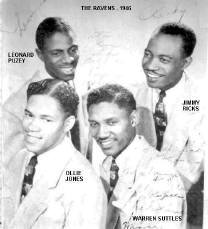
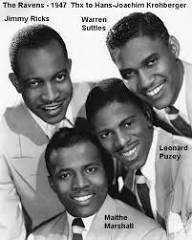
Before 1946, black singing groups attempted to cross to white markets by sounding white. Begining with the Ravens in 1946 many groups stopped trying to sound hid their ethnicity, with the result the music sound more raw and rhythmic. R&B and gospel began to shape and define the new sound. The group singers in the late 40s and early 50s combined earlier pop-jazz with the gospel that they heard in the church and the R&B in the streets, to produce a new exciting sound.
In May of 1946, "Lullabye" began with a simple guitar introduction. The lead opened the song with "Goodnight My Love" in tenor. In the background, the singers sang ooh-ooh in a nondistinctive way, while a piano played in the background. In the second verse the singers began singing "doo doo d not only louder, but stidently with and with rhythm. At the end of this verse something remarkable happened.
The bass of the new group caled the Ravens, clearly separated himself from his groupmates and sang doo doo doo doo doo doo, as a punction to the last line of the second verse. a few more punctions were sung before the bridge, but less loudly. The bass was Jimmy Ricks, who sang second lead in the bridge. Lullaby gave the insistent rhythm of doo-wop, nonsense syllables by background singers and a distinctive bass.
|
|
The Ravens were formed in New York by bass Jimmy Ricks and baritone Warren Suttes and added second tenor Leonard Puzey and lead first tenor Ollie Jones. The Ravens first appeared in the spring of 1946 at the Club Baron. After recording six sides for Hub, Jones was replaced with falsetto lead Maithe Marshall. The group then moved to Jerry Blaine's National Records.
The Ravens now sang in the pop-jazz style of earlier groups, but added a blues interpetation. What made the group special was Rick's bass. Ricks led the Ravens on the bluesy, jazzy, and uptempo sides, and commonly did a bass profundo contrasting second lead in the bridge of the Maithe Marshall-led ballads.
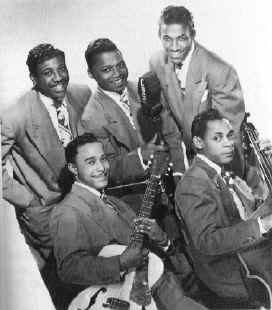
The Orioles
(Top Left to Right) Alexander Sharp, George
Nelson and Sonny Til
(Bottom Left to Right) Tommy Gaither and Johnny Reed
The Orioles were just as important as the Ravens, but in a different way. They were the first to sing the doo-wop ballad. The Orioles were led by second tenor Sonny Til (nee Erligton Tighman). Second leads were assigned to baritone George Nelson. First tenor was was Alexander Sharp who aften separated from the harmony to sing above Til's lead. Johnny Reed sang bass. All together you had in 1948 "It's the Too Soon To Know," had the full compliment of doo wop characteristics and had the overall feel in what we now call a doo-wop ballad and marked the beginning of the doo-wop era.